*What happens to Cole Turner across The Department of Truth? Cole begins as an FBI investigator studying conspiracy belief, encounters the impossible during a flat-Earth investigation, and is taken into the secret Department of Truth. His new superiors supply an explanation for the world, but they withhold the agency's role in manipulating his childhood. After obeying an order to murder two journalists, Cole becomes vulnerable to blackmail and increasingly unable to separate the Department's stated purpose from its abuses. Revelations about his past, the exposure of his actions to his husband Matty, and the rise of a more ruthless regime ultimately drive him out of institutional loyalty and toward an alternative network. The Cole Turner character arc* is not a story about an innocent investigator discovering a single perfect truth. It is the more difficult story of a person learning that he must answer for choices made under a system that controlled the evidence available to him.
How to read Cole's arc without confusing the chronology
The comic releases clues about Cole's life in a deliberately unstable order. It first presents him as an adult investigator with unsettling childhood memories. Later issues reveal that agents helped cultivate the very stories that injured him. A good chronology therefore needs two tracks: when something happens in Cole's life and when the reader learns enough to reinterpret it. These tracks intersect, but they are not interchangeable.
For example, the childhood Star-Faced Man operation belongs before Cole's adult recruitment. Its significance is introduced and revised through the material in #2, #9 and #12–13. Likewise, Cole's murder of Daniel Clay and the editor Robbie occurs in the early issues; the video returns as an instrument against Cole's marriage much later. Treating the later disclosure as a second murder, or treating childhood manipulation as something adult Cole knowingly approved, would distort the arc.
The following reading separates three levels of evidence. Depicted action means an event the comics visibly present. Character account means what an interested speaker says occurred. Analysis identifies a pattern inferred from the juxtaposition of those events. These distinctions matter in a series where a photograph can be genuine yet misleading, an archive can preserve a planted story, and a mentor can speak with apparent authority while hiding an allegiance. The issue numbers below are navigational scene locators. They are not invented printed page numbers.
Stage one: Cole investigates belief instead of accepting it
At the start of issue #1, Cole has a professional relationship with the study of conspiracy theories. His FBI and Quantico background makes him a person trained to ask how extraordinary claims are made, why they circulate and what evidence supports them. He is not initially looking to become a believer in a secret cosmology. His assignment in the flat-Earth milieu makes sense because he recognizes the networks and methods through which conspiratorial ideas acquire authority.
The opening investigation becomes unnerving because it involves more than overheard conversation. Cole moves through a gathering that promises privileged proof, encounters the Boulet brothers and is exposed to an apparently impossible account of geography. The journey toward Antarctica and the ice wall removes his comforting assumption that all the decisive questions can be answered through familiar investigative methods. The material is framed partly through his account, which includes uncertainty about his own condition and memory. A reader should not silently upgrade every part of the witnesses' explanation into an objective fact about the world.
Cole's first essential trait is visible here: he keeps asking questions even when he is frightened and the available answers become inconsistent. His competence does not vanish when the premises of his work change. If anything, it becomes harder to exercise. He can identify the mechanisms by which an audience is persuaded, but in the Department's reality an expanding audience may alter the thing it is persuaded about. That reversal puts his expertise under pressure. Knowledge of propaganda can help him identify an intervention while leaving him unprepared for its physical effects.
It is tempting to describe this as the moment Cole becomes a true believer. That is too neat. Cole has an experience he cannot explain and hears several accounts that claim to explain it. Acceptance of an event is not the same as allegiance to the people who explain that event. The distinction will become critical when the Department asks him to treat his partial knowledge as sufficient justification for orders he cannot verify independently.
Stage two: recruitment offers answers and removes freedom
At the close of #1, Lee Harvey Oswald and Ruby explain a working theory of consensus reality. In their account, shared stories can become materially consequential, and the Department contains rival realities before they spread. This explanation gives Cole a framework for what he experienced, but it also arrives from an organization that has already decided what information he should receive. Lee becomes a senior authority in Cole's life while remaining a complicated and self-interested witness to the Department's own history.
Cole's recruitment has an unusual shape. He does not calmly examine a written job description, assess the agency's oversight and volunteer after fully understanding the risks. The Department announces that he is joining. He is given pieces of an extraordinary explanation and placed in an environment where leaving would not necessarily restore his prior life. This does not mean he loses every power to choose. He continues to pursue information, challenge explanations and make consequential decisions. It means his choices occur within an imbalance of power deliberately maintained by the people above him.
Issue #2 immediately complicates the notion that access to the secret world brings peace of mind. At home, Cole cannot simply share his assignment with Matty. In the Department's archive, he encounters records connected to images that have troubled him since childhood. He asks about dates and corroborating material rather than merely accepting his first frightened reaction. The archive does not resolve the origin of the Star-Faced Man, but it gives him a reason to suspect that his apparently private history reaches beyond himself.
This stage establishes a contradiction that will remain with him: the Department is both the institution with the files he needs and an institution he cannot independently audit. Cole's longing for an answer gives its officials leverage. Their information is useful, yet his need to believe them is precisely what should make him cautious. The reader is placed inside that dependency rather than given a neutral outside vantage point.
Stage three: the early cases turn knowledge into responsibility
The Mary Todd case in issues #3–4 brings the abstract premise into contact with bereavement and fear. The story involves Roger, a child whose death is bound up with disputed material and the frightening possibility that grief can be turned into a new collective account. Mary is not simply a demonstration specimen for the Department's theory. She is a mother whose loss creates a profound vulnerability to anyone offering an alternative history.
Cole's position is morally uncomfortable before the issue reaches its later violence. He is expected to understand why an alternative version of a traumatic event might destabilize consensus, yet he also sees the human stakes of deciding what someone is permitted to know or hope. The Department's protective language creates a question it does not answer: does maintaining the currently dominant account entitle agents to control a grieving person's access to information?
The case marks Cole's transition from student to participant. He can no longer treat claims about reality as topics to be researched at a safe distance. Witnesses may be endangered by stories deliberately brought to them, and an investigator's choice to transmit or withhold material can influence the outcome. His actions are therefore part of the moral problem, even when he does not design the operation.
The decisive line is crossed later in issue #4. Lee orders Cole to kill journalist Daniel Clay and Clay's editor, Robbie. Cole shoots both; issue #5 deals with the immediate aftermath. The killings are not a metaphor for compromised journalism or a vaguely hinted future possibility. They are a depicted action for which Cole is responsible.
This is the central fracture in a simple heroic account of his growth. Cole is neither an agent who merely observes official wrongdoing nor a purely helpless witness. He obeys an order that results in two deaths. Pressure, secrecy and the Department's extraordinary claims are essential to understanding the context, but they do not erase the act. If the arc is described as an awakening of conscience, it must confront the fact that the awakening comes after he has caused irreversible harm.
The nature of the victims also matters. They are people working with information, a resource the Department treats as both a public danger and an object of secret management. Killing journalists is an extreme expression of the agency's assumption that it may control the circulation of evidence. Cole has now carried that assumption from an explanation about reality into lethal enforcement.
Stage four: childhood evidence reverses the direction of the investigation
The Star-Faced Man initially appears to Cole as an image from a terrifying and confusing childhood. His memories are associated with the Satanic Panic, a real historical episode of widespread false accusations and moral fear that the fictional comic uses as material. Nothing in the series should be offered as real-world proof of the panic's allegations. The important fictional question is what happened to Cole and who was involved in shaping the story he inherited.
The series revisits the past through flashbacks and conversations, notably in #9 and #12–13. Young Hawk Harrison and another operative are linked to a plan involving images inserted into broadcasts, the circulation of Cole's drawing and the widening recognition of the Star-Faced Man. The issue is not simply whether Cole was frightened by something he saw. It is that adults with institutional power manipulated the conditions under which he might see, remember and describe it.
This creates an important difference between a false childhood memory and a childhood memory manufactured through intervention. The first phrase might imply that nothing happened. The second recognizes that an agent can introduce terrifying material into a child's environment and then make the child's response useful to a larger operation. In the comic's fictional belief mechanics, even a planted image can acquire dangerous force. The manipulation does not make Cole's fear unreal, and the fear does not prove every explanation later offered for it.
Cole's discovery changes the direction of his investigation. At first he wants the Department to explain why a creature from childhood seems connected to newer records. Eventually he must ask whether the Department itself helped create the creature's cultural life. The organization shifts in his mind from the holder of answers to a subject requiring investigation. A helpful institution may also be a perpetrator.
The timeline is central here. Cole was the child whose environment was manipulated, not the adult author of the manipulation. His decision to seek answers later does not retroactively consent to what was done to him. This distinction has been confused in some secondhand summaries, and it is vital to his character's moral position. He is accountable for his later choices while remaining a victim of an earlier operation.
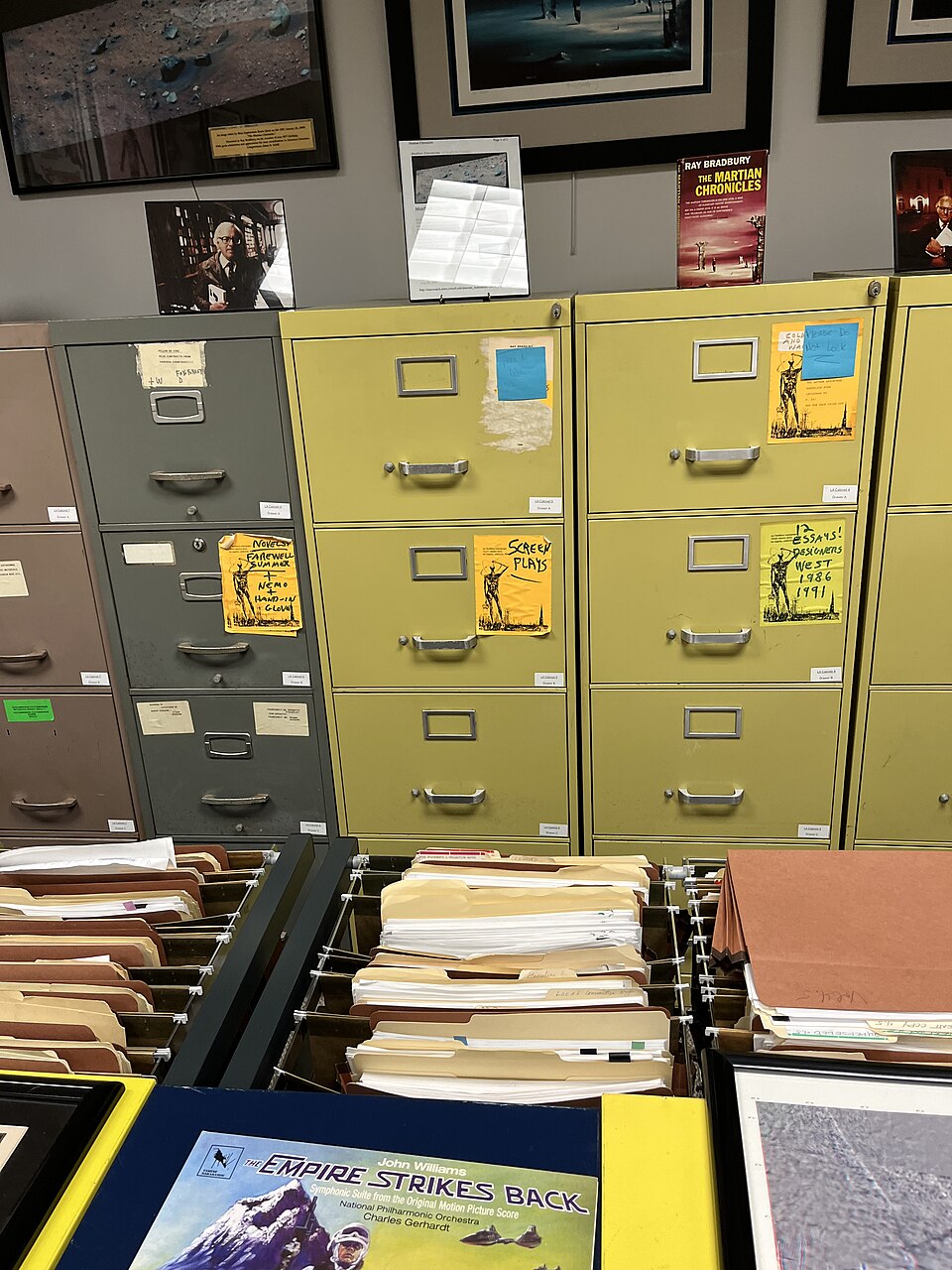
Stage five: Hawk's confession poisons the idea of a trusted mentor
Hawk functions as a guide to the Department's field traditions, particularly around the Bigfoot material in #10–11. The field-office perspective broadens Cole's understanding beyond the agency's internal presentations. Stories about local creatures exist in families, communities and inherited practices, not only in official case files. The agent sent to confront one may encounter people whose lives cannot be represented adequately by a containment classification.
The relationship becomes more painful when Hawk reveals in #12 that he has a long connection with Black Hat. Issue #13 continues the account of the Star-Faced Man and involves a complex encounter in which Cole shoots Hawk in the shoulder at Hawk's request. These scenes complicate outward appearances of betrayal and loyalty. They also make Cole confront the possibility that his sources of instruction were using him for reasons he could not understand.
The point is not that everything Hawk has taught him is therefore false. That would repeat the same binary thinking the series interrogates. The point is that a useful lesson can come from a compromised teacher. Hawk's field experience may contain genuine insight; his concealed affiliation changes how Cole should assess the story surrounding that insight. Knowledge and trust need to be evaluated separately.
Cole is caught between two organizations that appear to oppose each other while sharing an interest in controlling the spread of stories. Neither offers a fully independent account of the past. His difficulty is not merely choosing which side has the better slogan. It is learning to act without granting any faction a monopoly over the interpretation of his own life.
Stage six: Matty makes the cost of secrecy impossible to contain
Cole's professional crisis has a private witness: Matty Kane, his husband. The series introduces their marriage before readers have enough information to appreciate how much of Cole's life is concealed. Matty is not an extension of the Department and does not owe the agency the silence that it imposes on Cole. His position makes the story's questions about informed consent unusually concrete. What does it mean to love someone when a major part of that person's recent conduct is withheld not merely for privacy, but because disclosure could expose wrongdoing?
Issue #19 changes the balance between them. Black Hat has footage of Cole killing Daniel Clay and Robbie, the two journalists targeted in the early storyline, and uses the recording to reach Matty. The past becomes visible through an object with a new audience. Cole cannot explain the video away as a theoretical dispute about consensus reality. Whether or not he was under orders, the image implicates him in an act he concealed from the person closest to him.
That mechanism distinguishes the marriage plot from an ordinary scene in which a partner discovers a secret job. The disclosure is mediated by adversaries, and those adversaries have a strategic interest in how Matty reacts. The possibility of manipulation does not make the central fact false. It forces Matty and Cole to confront both the underlying violence and the reasons a rival organization chose to reveal it. A record can accurately depict an action while serving a coercive purpose in the hands of its distributor.
Issue #20 gives Matty a life and history outside this crisis. His work with words, his relationship with Cole and their shared past are not simply exposition before a confrontation. They provide a measure of what the institutional struggle damages. The more fully the reader understands Matty as a person rather than as "the agent's spouse," the less satisfying it becomes to argue that every secrecy decision was justified because the Department claimed exceptional stakes.
Cole's response cannot be evaluated on a binary scale of either complete loyalty to Matty or complete loyalty to the Department. A sudden confession might create further risks, while continued silence protects a relationship built on incomplete information. The writing refuses to make either consequence disappear. Cole may be genuinely afraid for Matty, but concern for another person's safety can become a rationale for denying that person's agency. The character arc asks readers to see the protective intention and the controlling effect at the same time.
This is also a change in what counts as evidence for Cole. At the beginning he searches for documents capable of explaining extraordinary public claims. By the time the video reaches Matty, a document has become a piece of evidence against himself. He is no longer merely evaluating how other people's beliefs are manipulated. He is confronting a fact that another party can use to alter his own life.
Stage seven: disclosure turns a private dilemma into a public question
The Ministry of Lies material and the subsequent disclosure storyline enlarge the scope of the conflict. Issues #21-22 bring Matty, Lee and the possibility of a newspaper account into the same narrative field. Later, the publisher's official description of issue #28 expressly presents the Department's highest official revealing its history to a journalist who is also Cole's husband. That solicitation establishes the broad public-facing premise without replacing the specific scenes in the comics.
A public story is especially dangerous within the comic's fictional physics because publicity is not a neutral vehicle. A false account may gather enough believers to affect the world; a true account might also make a hidden phenomenon impossible to contain. The Department's stated rationale for suppressing information therefore has a logic that ordinary political thrillers do not share. That supernatural logic, however, cannot absolve its officials of the choices they have made while controlling the archive.
For Cole, the question of disclosure is sharpened by his own compromised record. He cannot join an argument for transparency while pretending he has been only an observer. The killings mean that a complete record could damage his reputation, his career and his relationship. This is a useful test of whether his changing beliefs are merely a response to being mistreated, or a growing willingness to accept consequences that cannot be managed away.
The series does not make every advocate of disclosure automatically reliable. Black Hat uses information strategically and can release true material for destructive purposes. The Department can cite real dangers while concealing its abuses. A journalist can attempt to inform the public while lacking access to the full machinery behind events. Cole must navigate these incompatible positions, none of which offers an effortless standard for moral action.
Readers should resist reducing the publication question to a hypothetical referendum with one proven correct outcome. A piece of reporting might expose an institution, but the comic has not supplied a universal test that predicts the effects of every revelation on consensus. The absence of that formula is important. Characters who claim to know with certainty what the public must never learn are exercising an extraordinary amount of power on an incomplete evidentiary basis.
The late-twenties issues also mark a shift from the solitary investigator model. Cole's choices interact with Matty's decisions, Lee's institutional calculations, the Department's internal divisions and Black Hat's efforts to exploit both. Even an apparently private act becomes entangled with other people's knowledge and agency. That is a broader moral horizon than the one available to the man attending the flat-Earth event in issue #1.
Stage eight: a new regime forces Cole to reconsider what loyalty means
A further rupture appears around issues #33-35. The conclusion of #33 invokes a Department file on Cole, linking the institution's history of managing unusual witnesses with its longstanding attention to him. The file's importance lies first in its existence and the timing of the request. The panels do not authorize a fabricated inventory of all the photographs, diagnoses, orders or observations it might contain. A character's file can be narratively important without the reader being allowed to know everything inside it.
The official publisher description of #34 establishes that a dangerous new regime has taken control of the Department and that Cole is on the run. It also frames Black Hat as a possible refuge. Those are unusually severe conditions for someone whose career began with a reluctant but real dependence on Department resources. Former organizational loyalty no longer provides personal safety, and the supposed enemy may possess the information or assistance needed to survive.
Issue #35 raises the pressure further. Image Comics describes Oswald sending agents after Cole and Cole choosing to face the Star-Faced Man. This is a striking return to his earliest personal terror. The publisher's outline does not establish a complete resolution of every childhood mystery or make one interpretation of the ending definitive.
Around issue #35, White Hat emerges as an alternative network involving former Department personnel. For purposes of this article, the contrast can be analyzed without claiming that White Hat has already demonstrated an entirely transparent or humane way of operating. A group founded by people with secret institutional experience inherits knowledge, networks and temptations from the predecessor it opposes. Declaring a new name does not itself solve problems of consent, evidence or accountability.
What does this transformation tell us about Cole? He has gone from relying on one institution for authoritative explanations to confronting a world in which institutional identities are shifting and allegiances may be tactical. The essential change is not that he suddenly knows everything. It is that he can no longer reasonably assume the organization that employed him also defines the limits of his responsibilities.
The phrase "Cole chooses the devil he knows" in the issue #35 solicitation is more useful as a description of a dangerous choice than as proof of a clean conversion to another camp. The character is still working with limited options. He cannot detach the external crisis from his intimate history with the Star-Faced Man, and he cannot treat the past as something he has already mastered by reading a single case file.
Stage nine: what the later historical chapters do and do not establish
The historical material in issues #36-38 enlarges the surrounding institutional and conspiracy mythology. A character chronology should not automatically treat every flashback as a new adult Cole adventure. These chapters can alter the historical framework against which his decisions are understood without depicting him taking the next chronological step in the present. That is an important discipline for a wiki that seeks to connect many time periods.
This account stops at issue #35 for Cole's present-day story. The historical chapters in #36–38 add context, but this guide does not claim a later resolution of his central conflict.
There is also a limit to what a character study can infer from a historical revelation. A newly disclosed piece of the Department's history may make a past choice more comprehensible, but it does not change the fact that Cole made that choice with less information at the time. Retrospective explanations should clarify rather than erase the choices readers originally witnessed.
Cole Turner character arc: event chronology and reader revelation
The following table emphasizes the difference between an event's place in Cole's life and the issue that changes the reader's interpretation. It identifies the issues that support each stage while marking remembered events and attributed accounts.
| Stage | Main evidence or reveal | Why it changes Cole's arc | Evidence boundary |
|---|---|---|---|
| Childhood | Star-Faced Man imagery, later linked to an engineered media campaign | Cole's earliest fear becomes an institutional case rather than only a private memory | #2, #9, #12-13; distinguish memory from flashback |
| Professional investigation | Flat-Earth gathering and Antarctic experience | Cole's methods for studying belief meet an apparently impossible event | #1; experience partly presented through Cole's account |
| Recruitment | Lee and Ruby offer an explanation and impose institutional obligations | He obtains access to answers without equal power to verify them | #1-2; attributed institutional explanation |
| Early moral crisis | Mary Todd case and murders of Daniel Clay and Robbie | He becomes responsible for violence performed in the agency's name | #3-5; depicted events |
| Field education | Hawk and Darla's Bigfoot investigation | The problem broadens from official doctrine to local stories and witnesses | #10-11; original field-case material |
| Mentor's concealed history | Hawk's Black Hat connection and Star-Faced Man operation | Cole learns that the groups supposedly explaining his past also shaped it | #12-13; separate confession and explanation |
| Marriage exposed to the secret war | Recorded killings reach Matty | Evidence becomes a weapon aimed at the person closest to Cole | #19-22; do not infer a wider broadcast |
| Disclosure debate | Hidden history reaches a journalist | Truth-telling carries personal, institutional and supernatural stakes | #21-22, #28-30; issue #28 solicitation corroborates broad premise |
| Change of regime | Cole's file is invoked, and he goes on the run | The institution no longer offers even the appearance of secure membership | #33-35; issue #34 and #35 publisher descriptions corroborate general stakes |
Why his development is not a simple hero's journey
A conventional character summary might call Cole a skeptic who becomes a believer, then a believer who becomes a rebel. That describes an outward trajectory but overlooks the story's central ethical complication. Each position carries a different relationship to evidence. The skeptic can underestimate phenomena outside his expectations; the recruit can over-trust a persuasive institution; the dissident can romanticize any source that promises to expose his former employers.
Cole's strongest quality is not his ability to reach certainty. It is the persistence of his questions after certainty becomes unavailable. His weakness, meanwhile, is not merely gullibility. It is his susceptibility to authoritative stories that promise to transform fear into a manageable explanation. The same desire makes him sympathetic and leaves him vulnerable to being directed by others.
He is therefore a useful protagonist for a story about contested records. Readers cannot simply identify with him as a trustworthy camera moving through an otherwise transparent world. They have to evaluate what Cole has been told, what he witnessed, how his own memories were shaped, and what he decided to do with the knowledge available. His viewpoint is intimate, but intimacy is not omniscience.
That distinction is essential when considering culpability. The childhood operation was done to Cole. The order to murder the journalists was issued to Cole. The shootings were carried out by Cole. These statements are not interchangeable. A complete account can recognize deliberate manipulation, coercive power and actual responsibility without flattening them into one judgment.
The story also refuses to let political allegiance substitute for moral evaluation. Cole can reject Department methods while still owing a reckoning for actions performed under its authority. Black Hat can reveal a true event while acting to destabilize a marriage or an institution. A new network can offer refuge while remaining ethically untested. The guiding question for his later arc is not simply which group he joins, but how he proposes to make decisions when no group deserves unquestioned trust.
What to watch for when rereading Cole's scenes
A second reading benefits from keeping separate records for what is pictured, who explains it, and who benefits from that explanation. This method changes several familiar moments. In #1, an extraordinary sight and Lee's explanation are separate forms of evidence. In #2, a record that resembles Cole's childhood terror is not the same as proof that all his memories are accurate. In #19, the factual content of a recording is different from the motive of the person delivering it.
Notice also what the script does with people outside the Department's chain of command. Matty has experiences and professional interests the agency cannot fully control. Journalists seek information that the Department would rather suppress. Local witnesses have relationships with frightening stories that predate the agents assigned to manage them. Cole's maturing perspective becomes visible when those people are no longer treated merely as obstacles to a containment plan.
Finally, look for changes in whose words end a scene. The agency's explanation frequently appears to settle a difficult question, but subsequent scenes reopen it. That pattern encourages the reader to resist stopping at the first confident interpretation. The result is a character arc built through revision: a revelation does not always supply a new answer; sometimes it changes the question Cole should have been asking.
Frequently asked questions
Who is Cole Turner in The Department of Truth? Cole Turner is an investigator with an FBI background who studies conspiracy belief before being recruited by the secret Department of Truth. His experiences force him to confront the comic's fictional idea that widespread belief can influence physical reality. His story also examines how an institution can exploit a person's need for answers.
Why does Cole join the Department? The Department recruits him after a flat-Earth investigation involving an apparently impossible Antarctic experience. In issue #1, he receives an explanation from Lee Harvey Oswald and Ruby, but the circumstances do not amount to a fully informed, freely negotiated career choice. Recruitment is bound up with secrecy and a major power imbalance.
Is Cole responsible for the journalists' deaths? Yes. In issue #4, Cole shoots Daniel Clay and the editor Robbie under Lee's orders. Institutional pressure is crucial context, but the shootings remain a central part of his personal responsibility. The recording returns as evidence against him in issue #19.
Was the Star-Faced Man part of Cole's childhood? The figure is linked to his childhood memories, and later material connects those memories to a deliberately cultivated media operation. Issues #9 and #12-13 are important to understanding what the Department and other agents may have done. The story distinguishes a frightening experience from the truth of every explanation offered for it.
What happens between Cole and Matty? Their marriage is damaged by secrecy and the exposure of Cole's actions. Black Hat uses footage of the killings to inform Matty, and subsequent issues explore the consequences for their relationship as well as the broader question of disclosing the Department's history. Their conflict is a major part of Cole's transformation.
Is Hawk Harrison Cole's enemy or mentor? Hawk is a mentor figure with practical field experience, but his concealed connection to Black Hat complicates Cole's trust in him. A useful lesson does not guarantee an honest account of the teacher's motives. Issues #10-13 are key to this relationship.
Does Cole ever leave the Department? By the later issues he has broken from straightforward institutional loyalty, and the publisher explicitly describes him as on the run from the new regime in issue #34. The formation of alternative allegiances is part of the later narrative. A precise description of the status of any group he joins should be checked against the actual issue panels.
When is White Hat founded? Issue #35 introduces White Hat as an independent alternative. This guide does not assign it a definitive founding roster or complete chain of command.
Do issues #36-38 continue Cole's present-day story? They contribute historical context and may change how readers understand the organizations surrounding him. They should not automatically be listed as a continuous series of new present-day Cole actions. Distinguish flashback events from Cole's own chronological progression.
What is the best reading order for Cole's story? Begin with issues #1-5, then read the Star-Faced Man and field material around #9-13. Continue through #19-22 for the marriage and disclosure crisis, #28-30 for its later institutional consequences, and #33-35 for the new regime. This is a selective character guide, not a substitute for the series' complete reading order.
References
Sources are classified by role. Read the editorial method.
- The Department of Truth #1–5, #9–13, #19–22, #28–30, #33–35Comic primary sourcePrimary fictional sequence for Cole’s depicted actions, attributed accounts and later institutional crisis.
- Image Comics: The Department of Truth #28 (opens in a new tab)Publisher publication recordOfficial publisher description of the disclosure storyline.
- Image Comics: The Department of Truth #34 (opens in a new tab)Publisher publication recordOfficial publisher description of Cole on the run under the new regime.
- Image Comics: The Department of Truth #35 (opens in a new tab)Publisher publication recordOfficial publisher description of Cole and the Star-Faced Man confrontation.
- Samuel Zeller: Reading room (opens in a new tab)External referenceCC0 1.0 conceptual photograph, Geneva; not a location in the comic.
- LingLass: Ray Bradbury's file cabinets (opens in a new tab)External referenceCC0 1.0 conceptual photograph; not a Department archive.