What the story establishes
Events depicted in the fictional continuity, including encounters, operations, and physical manifestations.
An ongoing comic by James Tynion IV & Martin Simmonds
Belief shapes reality, and someone has to decide which version survives. Explore a source-backed guide to the series’ issues, characters, cases, and lore.
SUBJECT: CONSENSUS EVENT
ACCOUNT: CONTESTED
CLEARANCE: BLACK
Quick answer
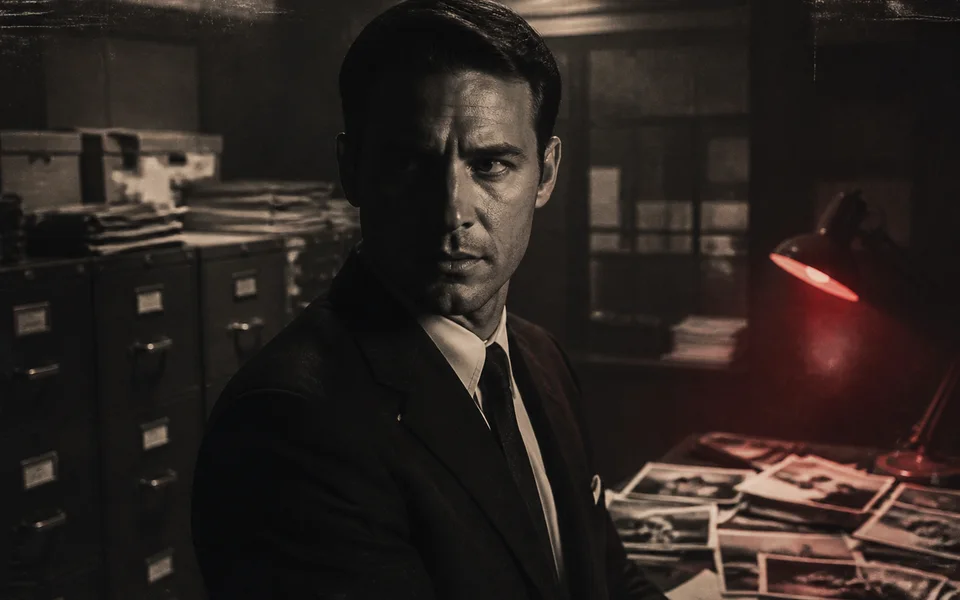
The Department of Truth is an ongoing Image Comics series written by James Tynion IV and illustrated by Martin Simmonds.
The comic follows Cole Turner after he discovers a covert organization that manages the material consequences of conspiracy belief. This independent wiki tracks the published issues, characters, organizations, cases, historical context, collected editions, and adaptation record without treating fictional claims as documented history.
Series statusOngoing
Latest issueNo. 39 · Oct 2026
Primary conflictDepartment / Black Hat
Core mechanismConsensus reality
Primary conflict
Cole Turner’s recruitment exposes a covert struggle over which stories remain stories—and which become the world.
Personnel archive
Their histories connect recruitment, field operations, testimony, family consequences, and the struggle over who controls reality.
Browse all characters and people →Cole Turner is an FBI investigator and the central viewpoint character of The Department of Truth. After encountering phenomena connected to the flat-Earth movement, he is…
Source-backed guide through issue #38; unresolved claims remain attributedRead the Cole Turner profile →Lee Harvey Oswald is one of the principal figures in The Department of Truth, a fictional alternate-history thriller in which belief can shape the world. The series reimagines…
Continuity subject; identity contestedRead the Lee Harvey Oswald profile →Ruby is a senior operative of the Department of Truth who works closely with Cole Turner in James Tynion IV's comic series. She combines the practical habits of a field agent…
Source-backed guide through issue #38; unresolved claims remain attributedRead the Ruby profile →Matty Kane is a major supporting character in The Department of Truth, the husband of Cole Turner, and a copy editor at the Washington Post. Although he initially stands…
PublishedRead the Matty Kane profile →Hawk Harrison is a veteran operative in The Department of Truth whose career crosses the boundary between the secret Department of Truth and its rival Black Hat. He is…
Source-backed guide through issue #38; unresolved claims remain attributedRead the Hawk Harrison profile →Martin Barker is a leading figure in Black Hat, the organization that seeks to break the Department of Truth's exclusive control over the narratives shaping reality. He first…
Source-backed guide through issue #38; unresolved claims remain attributedRead the Martin Barker profile →Three-layer record
The comic distinguishes events that occur, claims made by its institutions, and the documented history those claims appropriate.
Events depicted in the fictional continuity, including encounters, operations, and physical manifestations.
The Department, Black Hat, and individual witnesses explain reality from positions that may be partial or strategic.
Documented events and real conspiracy folklore remain separate from the series’ supernatural secret history.
Case files
A manifestation can confirm that belief changed reality without proving the history believers used to summon it.
 CON–001
Concept
 PER–009
Character / entity
 MAN–003
Manifestation
 CAS–009
Case file
The historical event later surrounded by the comic’s fictional institutional account.
Accounts of reality-management activity whose details depend on institutional testimony.
An FBI investigation leads Cole into the conflict between the Department and Black Hat.
Later revelations continue to revise the meaning and sequence of earlier events.
Publication file
Image Comics marks issue #39 published on October 28, 2026. Our spoiler-free guide covers the publisher’s new-arc setup; a story recap awaits review of the issue itself.
The numbered sequence preserves the intended disclosure of the Department’s history. Flashbacks and issue #0 are best read where they were published.
Read issue #1 →RECORD REMAINS OPEN
From our archive
Four recent explainers and substantial guide updates, grounded in the published comic.
View all published storiesA source-led reading of the opening two issues that separates depicted events from Lee and Ruby’s explanations.
Read story Updated guideThe Bigfoot story in The Department of Truth shifts the series from archives, political conspiracies, and manufactured documents to the dangerous work of people who confront…
Read story New storyHow sketches, memories, montage, and close-ups shape the two-part Bigfoot hunt in issues #10–11.
Read story New storyChoose a catch-up route before #40 using publisher collection contents, the #39 bridge, and optional rereads about memory, files, and public narratives.
Read storyAn independent reader’s archive for James Tynion IV and Martin Simmonds’ comic series.
The Department of Truth is an Image Comics series in which conspiracy beliefs can alter the world. Cole Turner encounters a secret institution that tracks the stories powerful enough to become physical realities. In the comic, a rumor may first appear as an ordinary anecdote, then as an impossible witness account, and finally as a threat that institutions try to suppress or exploit. That premise connects horror, political history, family relationships, media, and the problem of deciding what counts as evidence. The Department calls its own work protection. Other groups challenge its claim to decide which version of events the public is allowed to remember.
Readers can begin with the series guide, explore the reading order, or open Cole Turner’s profile. This is an independent fan reference, not an official publisher site. It distinguishes fictional events and characters’ claims from the real history the series adapts.
Cole Turner begins as a man studying conspiracy theories and becomes an unwilling participant in the machinery that manages them. His childhood experiences, especially his encounters with the Star-Faced Man, acquire new significance as the series reveals how they were manipulated. Lee Harvey Oswald, an alternative-history incarnation of the historical figure, presides over the Department and repeatedly presents his institution as a necessary defense against disaster. Their uneasy relationship provides a path into the earliest volumes without revealing the later institutional fractures in every navigation label.
The people around Cole are not accessories to the central mystery. Matty Kane, his husband and a copy editor at The Washington Post, must decide what secrecy means when it enters a marriage. Ruby carries out difficult field operations while questioning their consequences. Hawk Harrison teaches Cole the institution’s methods while concealing a history that puts his loyalty in doubt. Each character’s page connects named issues, relationships, and the evidence that complicates a simple biography.
The Department of Truth attempts to preserve an accepted reality by controlling dangerous manifestations and the circulation of the stories behind them. Black Hat, associated with Martin Barker, uses manufactured evidence, conspiracy movements, and public uncertainty to challenge that order. The Soviet Ministry of Lies offers a third view of information control, rooted in the series’ Cold War history. Later chapters introduce White Hat, whose origins make the moral problem more complicated than a battle between truth and falsehood.
These organizations disagree over whether an impossible entity should be destroyed, captured, hidden, or deployed. Their records are also arguments: each maintains an archive, an interpretation, and a preferred account of events. The organizations directory is a useful next stop when a reader wants to know who actually made a decision instead of relying on the explanation given by its beneficiary.
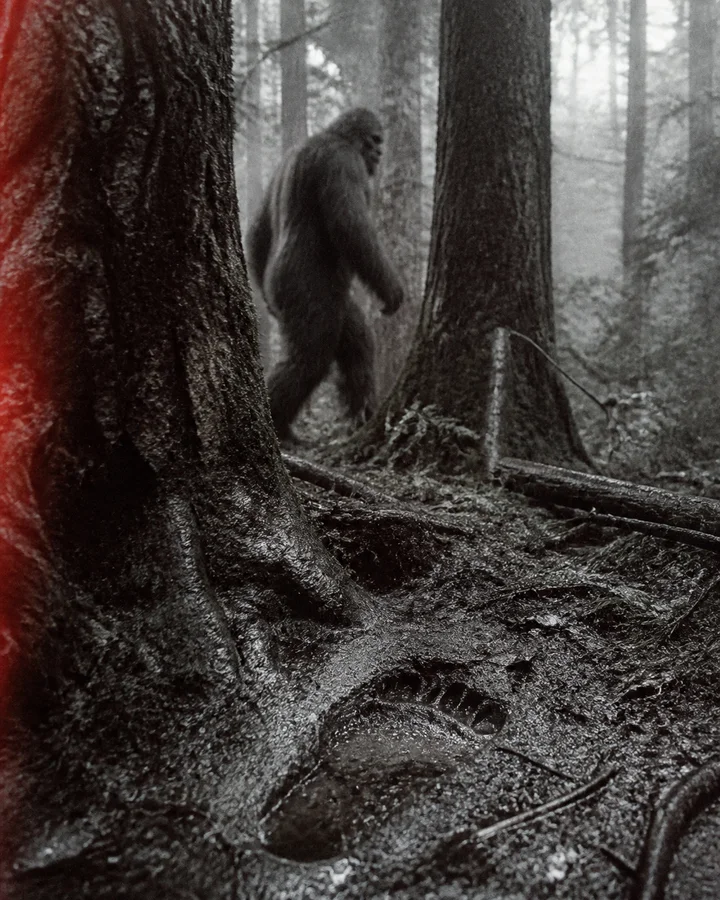
Some of the clearest illustrations of the premise are found in the investigations of Bigfoot, the Mothman, and the Star-Faced Man. They are not interchangeable monsters. The Bigfoot chapters connect a family’s field history to the cost of hunting a being that people have made real. Mothman raises questions about experiment, warning, and the interpretation of disaster. The Star-Faced Man exposes how the Department can deliberately create the danger it later claims to contain. The case archive separates events actually depicted in the main comic from supplementary field-file material and folklore background.
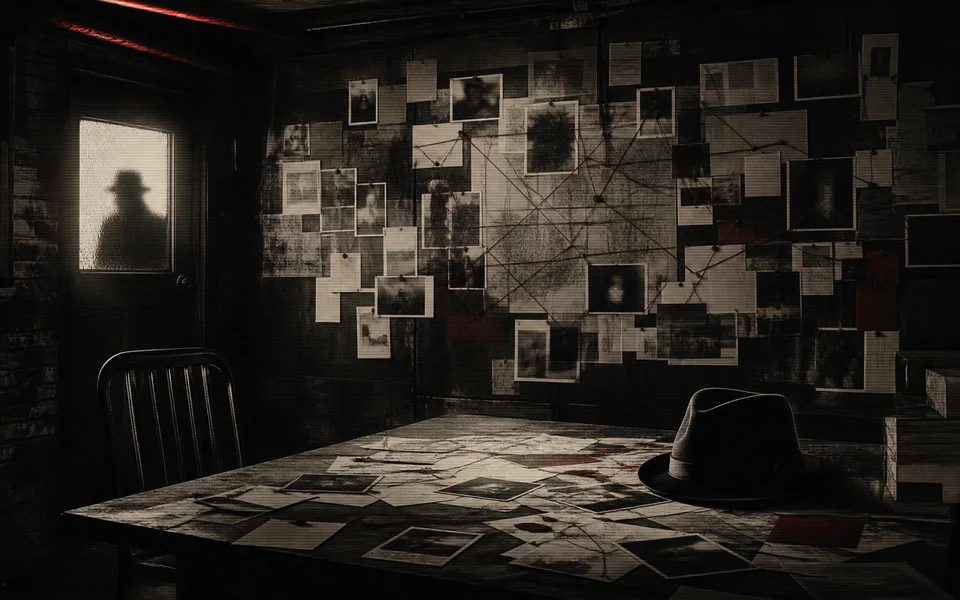
Other entries follow Mary Todd and the exploitation of a school tragedy, the Denver Working, and the conspiracy imagery surrounding Area 51. A case listing does not establish that a real-world rumor is true. It identifies where a narrative appears, what its witnesses say, and which details can be verified in the books available to the wiki.
Consensus reality describes the series’ fictional premise that widespread belief has consequences beyond ordinary persuasion. Manifestations are the striking physical results, but the mechanism also works through revised histories, shifting recollections, photographs, and broadcasts. Manufactured evidence matters because a forged document can alter what people believe; in this world, that change may begin to alter what the document appears to prove. These are story rules, not descriptions of established science or history.
A good way into these ideas is to compare the childhood television experiment in issue #9 with the later Hatman investigation. The former shows a coordinated institution planting an image; the latter shows online circulation and personal obsession making a rumor harder to contain. The reference archive collects these topics by mechanism, location, historical context, and type of evidence.
For a first read, start with issue #1 and follow the main series in publication order. The issue index groups individual issues, arcs, and collected editions while the reading order explains where the extra-length issue #0 and the companion Wild Fictions material belong. Publication order is not the same as fictional chronology. Flashbacks to Dallas, the Cold War, Hollywood, and the Department’s early field operations deliberately reshape the reader’s understanding of later scenes.
Collected readers can use the edition lookup for an ISBN or title, then confirm the printed contents with the collection map. Volume 3 is a common source of confusion because it contains nonconsecutive issues #6–7 and #14–17. No edition should be presented as adding a new story event merely because a story is printed again in a different format.
Image Comics lists issue #39 with an October 28, 2026 release date. The supplied issue-by-issue source library used for this wiki remediation, however, ends at #38. The issue #39 entry must therefore distinguish publisher-confirmed release information from a plot summary that has not yet been checked against that issue’s pages. A release date is not proof of an unseen scene. This boundary matters especially for a series designed to make the reader suspicious of documents that seem authoritative.
The Stories area provides longer explainers and reader guides, while About and Corrections explains how evidence and mistakes are handled. Readers can follow character links, search for a specific case, or compare two conflicting accounts, but should always be able to find what issue supports a significant assertion. Start with the source, follow the cross-links, and keep the uncertainty when the books leave it open.