For a first reading, start with The Department of Truth #1 and continue in publication order through the latest released issue, #38. The series’ flashbacks and historical detours are designed to change what earlier scenes mean, so a first-time reader gains more from preserving the order in which the information was released than from trying to rearrange every event by its fictional date.
If you prefer collected editions, follow the publisher’s printed contents rather than assuming that each trade is a simple six-issue block. Volume 3 is deliberately nonconsecutive: it collects #6–7 and #14–17. Volume 7, published August 26, 2026, collects #0 and #34–38, including “Suspicious Minds.” The numbered trades are the clearest path through the main series.
Wild Fictions is an optional companion hardcover, not a numbered eighth trade. It presents in-world case files about cryptids, myths, and urban legends, with additional material. Read it after Volume 1 for an early introduction to the case-file idea, or wait until after Volume 3 or Volume 4 if you want the larger institutional context first. That placement is a reader recommendation, not a publisher-mandated chronology.
Image Comics’ issue and collection records establish release dates and printed contents.
The suggested placement of Wild Fictions is reading guidance, not a publisher-declared chronology.
Publication sequence, fictional chronology, and documented real-world history remain separate records.
Choose the path that fits your reading goal
The fastest answer depends on format, not on a different version of canon. Single issues preserve every release-era reveal. Numbered trades provide practical reading units. Deluxe hardcovers collect long uninterrupted stretches, while Wild Fictions expands the Field Office case-file mode. A chronology-focused route belongs on a reread, after the publication sequence has established which information the story chose to reveal and when.
A single story can appear as a monthly issue, a trade paperback, and a deluxe hardcover without becoming three different events in the fictional continuity. The decision aid below compares convenience and reading goals; it does not rank one physical format as more canonical than another.
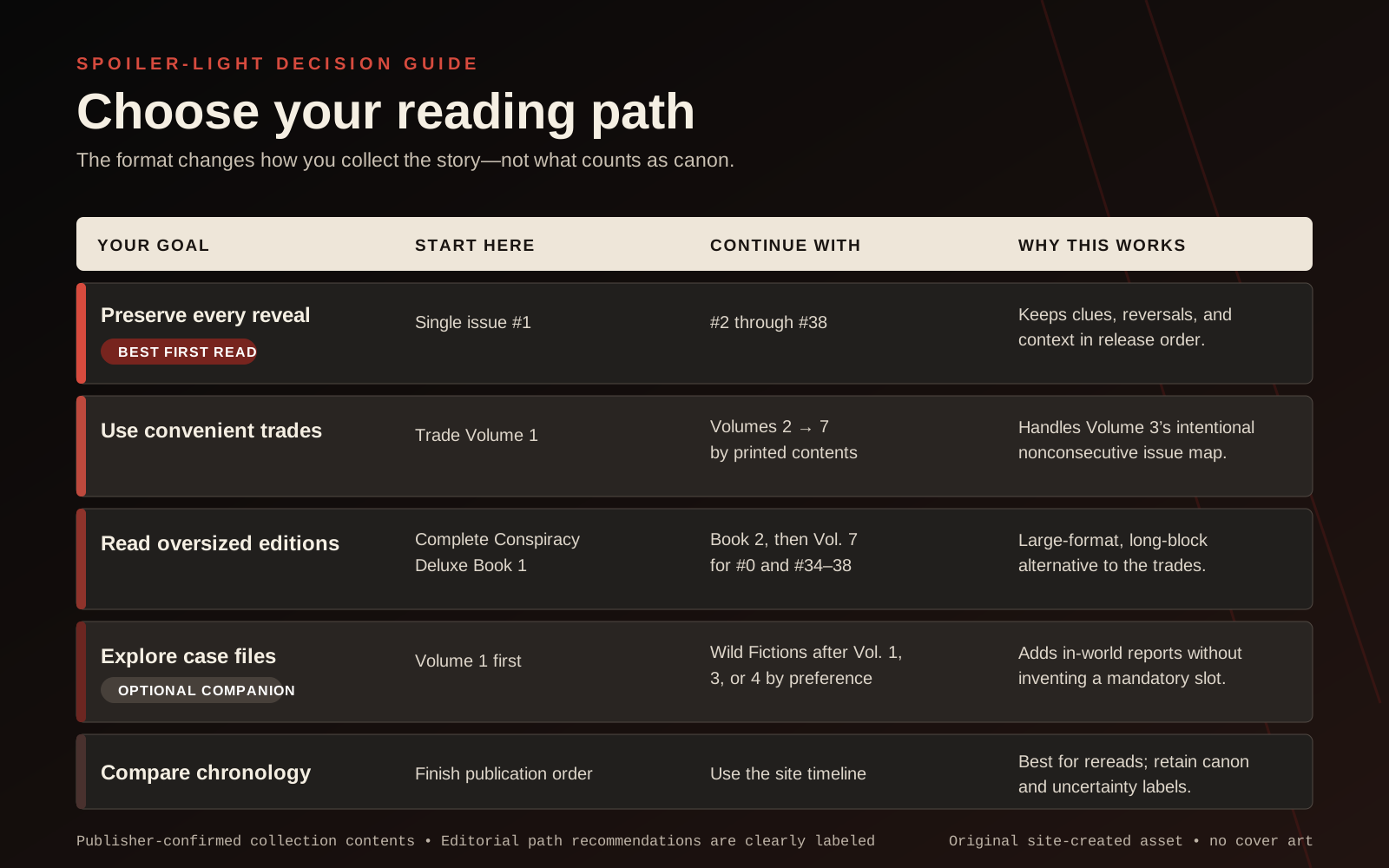
| If you want to… | Start here | Continue with |
|---|---|---|
| Preserve every reveal | Issue #1 | #2 onward in ascending publication order |
| Read in convenient trade units | Volume 1 | Volumes 2–7 by their printed contents |
| Read in oversized hardcovers | Deluxe Book 1 | Deluxe Book 2, then Volume 7 for #0 and #34–38 |
| Explore the case-file side | Volume 1 first | Wild Fictions as an optional companion |
| Compare story dates | Finish publication order | Use the story timeline and its confidence labels |
Publication order: the safest first read
Image Comics describes The Department of Truth as an ongoing series. As of September 5, 2026, the publisher lists #38, dated July 15, 2026, as the latest released numbered issue. It lists #39 for October 28, 2026 and #40 for November 25, 2026. Those entries remain forthcoming until Image records their publication, so #38 is the current endpoint for a first read.
The first reading assignment is still #1, not #0. Issue #0 was published on October 1, 2025 as an extra-length fifth-anniversary issue. It contains a major turning point for the Department and the first part of a three-part Elvis backup story. Its number and later release make it a special publication-era entry. Volume 7 places #0 beside #34–38 because that is how Image collected the material; the collection decision does not turn #0 into the series’ opening chapter.
Publication order also protects the series’ use of withheld information. A story may show a historical operation before Cole Turner knows how it connects to his present, or introduce a figure whose meaning changes after a later file is opened. Reordering those chapters by an estimated internal date can convert a deliberate reveal into a summary. For a first pass, read the numbered issues as they were published and use spoiler-labeled issue summaries only when additional context is useful.
The issue sequence is a publication record, not a statement about real history. References to the Kennedy assassination, Cold War intelligence, cryptid folklore, or government agencies are part of a fictional work that uses real subjects. The Department of Truth and the Ministry of Lies are fictional institutions. Real events require separately labeled historical context rather than the comic’s invented explanation.
Trade paperback order and the Volume 3 exception
The seven numbered trades are the most practical collected route. Read them as Volumes 1, 2, 3, 4, 5, 6, and 7, while following each book’s printed contents. Volume 1 collects #1–5; Volume 2 collects #8–13; Volume 3 collects #6–7 and #14–17; Volume 4 collects #18–22; Volume 5 collects #23–27; Volume 6 collects #28–33; and Volume 7 collects #0 and #34–38, including “Suspicious Minds.”
Volume 3 is the point most likely to confuse a new reader. Image’s record names Free Country and gives the contents as #6–7 and #14–17. The gap is not a missing issue in the trade. Issues #8–13 are collected in Volume 2, which is why the practical sequence remains Volume 1, Volume 2, Volume 3, Volume 4, and so on even though the issue numbers inside Volume 3 jump forward.
The trades are reading units, not a replacement chronology. A flashback printed in #14 may describe an earlier period than an event in #6, but the trade’s contents establish where the publisher placed those chapters for collection. Both facts can coexist without pretending that the collected sequence solves every story-date question.
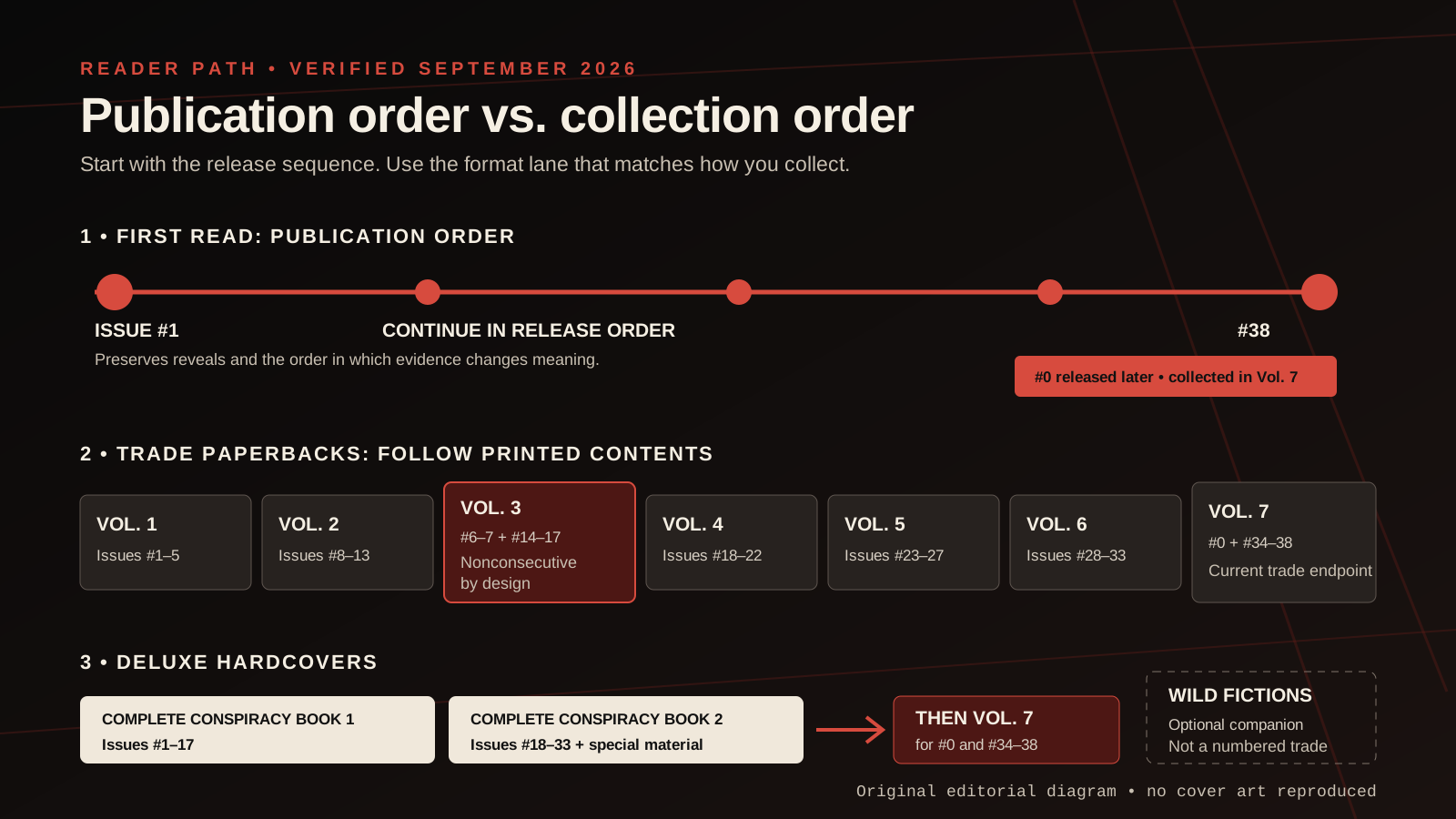
| Trade | Contents | Publisher date | Reading note |
|---|---|---|---|
| Vol. 1: The End of the World | #1–5 | February 24, 2021 | Opening arc and Cole’s recruitment. |
| Vol. 2: The City Upon a Hill | #8–13 | October 27, 2021 | Read after Volume 1. |
| Vol. 3: Free Country | #6–7, #14–17 | April 27, 2022 | Nonconsecutive by publisher design. |
| Vol. 4 | #18–22 | December 14, 2022 | The Ministry of Lies movement. |
| Vol. 5 | #23–27 | January 29, 2025 | The next numbered block after Volume 4. |
| Vol. 6 | #28–33 | October 29, 2025 | The digital-conspiracy and Hatman material. |
| Vol. 7 | #0, #34–38, including “Suspicious Minds” | August 26, 2026 | Current trade endpoint; #0 remains a later-published special. |
Where Wild Fictions fits
Image describes The Department of Truth: Wild Fictions as a 208-page hardcover published September 25, 2024. It collects the Wild Fictions entries and exclusive additional material. The publisher frames the book as in-world reports on Mothman, Bigfoot, the Flatwoods Monster, and other cryptids, myths, and urban legends, with work by a broad group of contributing artists.
That description supports a companion reading position. Wild Fictions expands the Field Office case-file mode; it is not listed as a numbered trade and does not replace any issue in the main sequence. A reader who wants the format introduced gently can read Volume 1 first, then open Wild Fictions before continuing through the trades. A reader who wants more institutional history first can wait until after Volume 3 or Volume 4. Both choices are defensible because the publisher has not assigned the hardcover a mandatory slot between numbered issues.
The Bigfoot material is a useful bridge for readers coming from the opening arc. It connects the case-file format to a subject the main series has already used, while the wider cryptid roster shows that the Field Office records are not simply a retelling of Cole’s first operation. This is a relationship of themes and formats, not evidence that every Wild Fictions entry occurs at a precisely dated point in the main continuity.
The hardcover is not “Volume 3.5,” not a secret chronological key, and not evidence that any folklore claim in the real world is true. Its case files are part of the comic’s fiction. Real cryptid history and cultural context belong in separately labeled records.
Deluxe hardcovers: a continuous large-format alternative
The two Complete Conspiracy deluxe hardcovers gather larger blocks of the main run. Book 1 was published May 3, 2023, runs 520 pages, and collects #1–17. It offers a continuous oversized route through the material covered by the first three trade volumes, including the nonconsecutive placement that makes Volume 3 unusual.
Book 2 was published June 17, 2026, runs 544 pages, and collects #18–33 plus “Suspicious Minds.” It overlaps the numbered contents of Volumes 4, 5, and 6 while naming the special material directly. Because “Suspicious Minds” is identified by the publisher as additional material and is also associated with the #0/#34–38 collection record, no unlisted issue number or separate chronological slot can be inferred from that wording.
The deluxe route is useful for readers who want long uninterrupted stretches and larger reproductions of the art. It is not a different canon. Publication order protects the first read, collection contents describe the physical edition, and story chronology may remain approximate or contested.
If you own Deluxe Book 1 and Book 2, the simplest path is Book 1, then Book 2, then Volume 7 for #0 and #34–38. If you have already read the single issues through #38, the deluxe books work well as a reread because the larger blocks make recurring motifs and visual transitions easier to compare. A retailer listing may abbreviate contents, so the Image Comics record controls this mapping.
Spoiler warning: arc placement and chronology
The End of the World occupies #1–5 and establishes Cole’s investigation, the Department’s operating theory, and the moral problem of containment. The City Upon a Hill occupies #8–13 and expands the series into American myth, religious authority, and competing institutional accounts. Volume 3 collects #6–7 and #14–17, the publisher’s chosen bridge between those early movements and the later history of the Department.
The Ministry of Lies covers #18–22, matching Volume 4. The title identifies an arc tied to the Department’s Cold War counterpart and the archive conflict in those issues. Wording such as “Archive of Lies” does not become a canon label unless a primary source uses that name.
Volume 5 collects #23–27, while Volume 6 collects #28–33. The latter aligns with Twilight’s Last Gleaming and its digital-conspiracy and Hatman material. Volume 7 continues with #34–38 and includes the “Suspicious Minds” material named by Image. These connections help readers move between a practical collection guide and deeper arc records without duplicating every plot summary.
Chronology belongs on a reread layer. The series uses historical subjects and flashbacks to make evidence unstable: a file can preserve a former account, a witness can be sincere but incomplete, and an institution can present a claim as fact because doing so serves its mission. The story timeline therefore retains confidence labels and separates fictional canon, in-universe claims, documented history, and uncertain dates.
A precise-looking date should never be added merely to make the reading order appear more authoritative. Publication dates can be verified from publisher records; fictional chronology must remain approximate wherever the issues leave it unresolved.
What to read next
For choosing where to begin, publication order and format are the essential questions. The broader series overview, collection specifications, spoiler-labeled Ministry of Lies analysis, Wild Fiction classification, and layered chronology provide the next levels of detail.
No single internal chronology is presented as the only correct route. The comic deliberately uses competing records and delayed disclosure; the safest first read preserves that design, while the linked reference pages provide evidence for readers who want to compare versions afterward.
Sources and verification boundary
Collection names, contents, dates, ISBNs, page counts, and issue status were checked against Image Comics’ current series and release records on September 5, 2026. The issue and arc records supply canon summaries and spoiler boundaries. Publisher pages are publication evidence; they do not turn the comic’s fictional Department, Ministry, conspiracies, or manifestations into real-world facts.
Issue #39 and issue #40 remain future-dated publisher listings as of September 5, 2026. Future verification is required when Image confirms either release, announces another trade or deluxe edition, or revises a collection record. The verification date should change only after a meaningful source review.
References
Sources are classified by role. Read the editorial method.
- Image Comics series page (opens in a new tab)Publisher publication recordOfficial ongoing-series record and current released/forthcoming issue list; checked September 5, 2026.
- Image Comics collected-edition index (opens in a new tab)Publisher publication recordOfficial publication sequence for numbered trades, Wild Fictions, and deluxe hardcovers.
- Volume 1 (opens in a new tab)Publisher publication recordOfficial record: February 24, 2021; 128 pages; collects #1–5.
- Volume 2 (opens in a new tab)Publisher publication recordOfficial record: October 27, 2021; 176 pages; collects #8–13.
- Volume 3: Free Country (opens in a new tab)Publisher publication recordOfficial record: April 27, 2022; 176 pages; collects #6–7 and #14–17.
- Volume 4 (opens in a new tab)Publisher publication recordOfficial record: December 14, 2022; 152 pages; collects #18–22.
- Volume 5 (opens in a new tab)Publisher publication recordOfficial record: January 29, 2025; 144 pages; collects #23–27.
- Volume 6 (opens in a new tab)Publisher publication recordOfficial record: October 29, 2025; 176 pages; collects #28–33.
- Volume 7 (opens in a new tab)Publisher publication recordOfficial record: August 26, 2026; 152 pages; collects #0 and #34–38, including “Suspicious Minds.”
- Complete Conspiracy Deluxe Book 1 (opens in a new tab)Publisher publication recordOfficial record: May 3, 2023; 520 pages; collects #1–17.
- Complete Conspiracy Deluxe Book 2 (opens in a new tab)Publisher publication recordOfficial record: June 17, 2026; 544 pages; collects #18–33 and “Suspicious Minds.”
- Wild Fictions hardcover (opens in a new tab)Publisher publication recordOfficial record: September 25, 2024; 208 pages; collects Wild Fictions entries and exclusive additional material.
- Issue #0 (opens in a new tab)Publisher publication recordOfficial record: October 1, 2025; extra-length fifth-anniversary issue and first part of a three-part Elvis backup.